
Toddler Program vs. Primary Program: Which Is Right for Your Child?
One of the most common questions we hear from families is a simple one: which classroom does my child belong in? The answer usually has less to do with your child's exact age and more to do with what stage of development they're in. Here's how the two programs differ, and how we help you decide.
Toddler Program: 18 months to 3 years
This stage is about movement, language explosion, and independence in the most basic sense — feeding themselves, washing their hands, putting on their own shoes. Our Toddler Program is built around short, repeatable activities that build coordination and a sense of order. Toddlers thrive on predictable routines, so the classroom day follows a steady rhythm they can count on: work time, snack, outdoor time, rest.
You'll notice fewer abstract materials in this room and more real, functional objects: child-sized pitchers, brooms, and washing basins. At this age, children aren't ready to pretend to pour water — they want to actually pour it, and get to practice until they're good at it.
Primary Program: 3 to 6 years
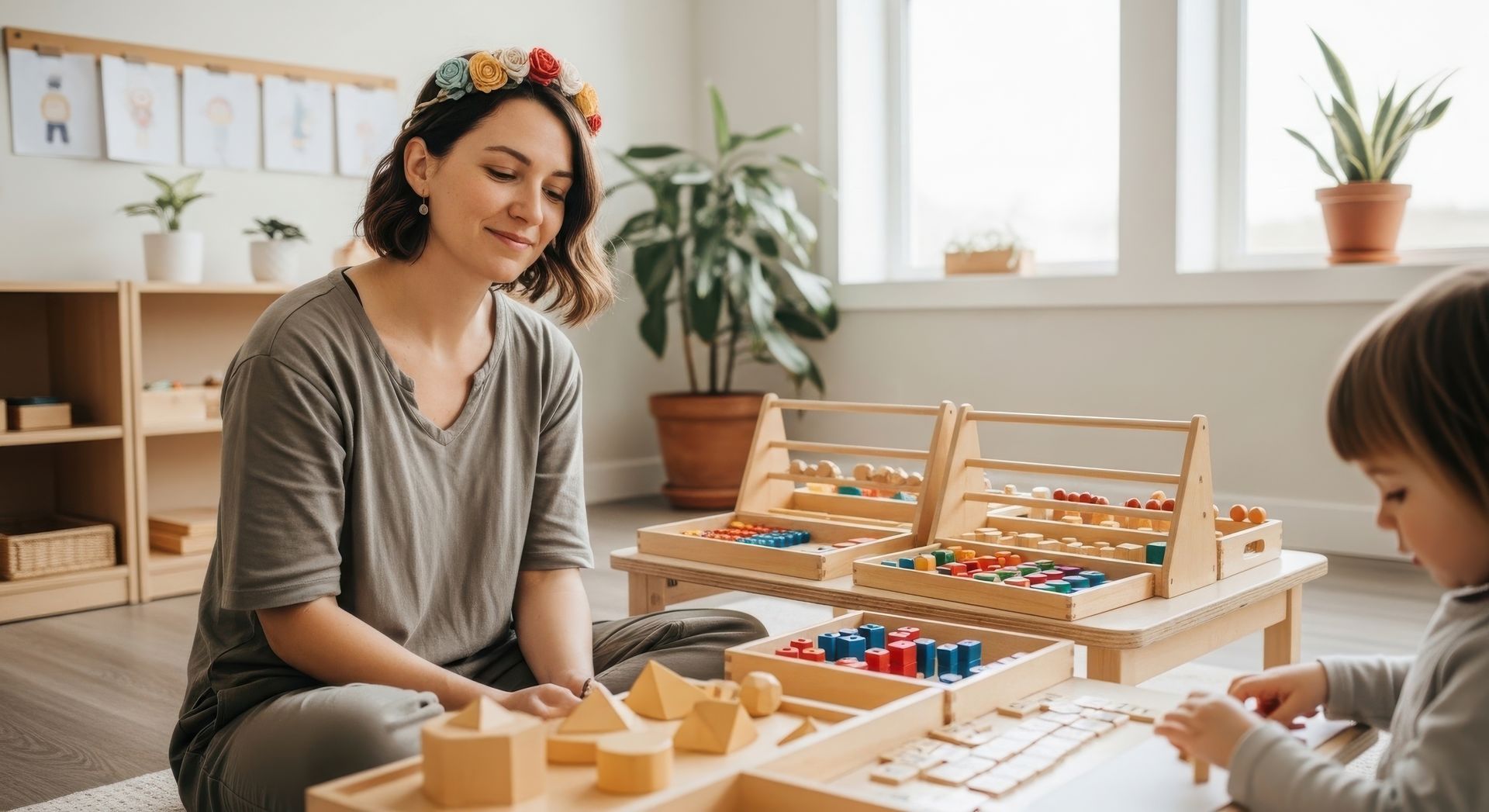
By age three, most children have the fine motor control and attention span to work with more complex materials — the ones people usually picture when they think of Montessori: the pink tower, sandpaper letters, bead chains for early math. This is also the age where the mixed three-year age span really shows its value, since a six-year-old and a three-year-old in the same room are working at very different levels, side by side.
The Primary classroom is where children move from concrete, hands-on exploration toward early reading, writing, and mathematical reasoning — but always at their own pace, and always by choice rather than assignment.
What if my child is right on the line?
Age is a starting point, not the deciding factor. We look at a child's language, coordination, ability to follow a short routine, and comfort separating from a parent. Some children move from Toddler to Primary a little before their third birthday; others benefit from a few extra months. We talk through this with every family individually, since no two three-year-olds arrive at the same place.
- Choose Toddler if: your child is still building basic self-care skills and thrives on short, repeated routines.
- Choose Primary if: your child has longer attention spans, is curious about letters and numbers, and works well alongside other children.
- Not sure? A short observation visit tells us more than a birth date ever could.
Both programs share the same underlying philosophy — respect for the child's pace, hands-on materials, and a prepared environment — they just meet your child where they are right now.
Not sure which classroom fits? We're happy to talk it through.