
What Is Montessori Education? A Guide for Omaha Parents
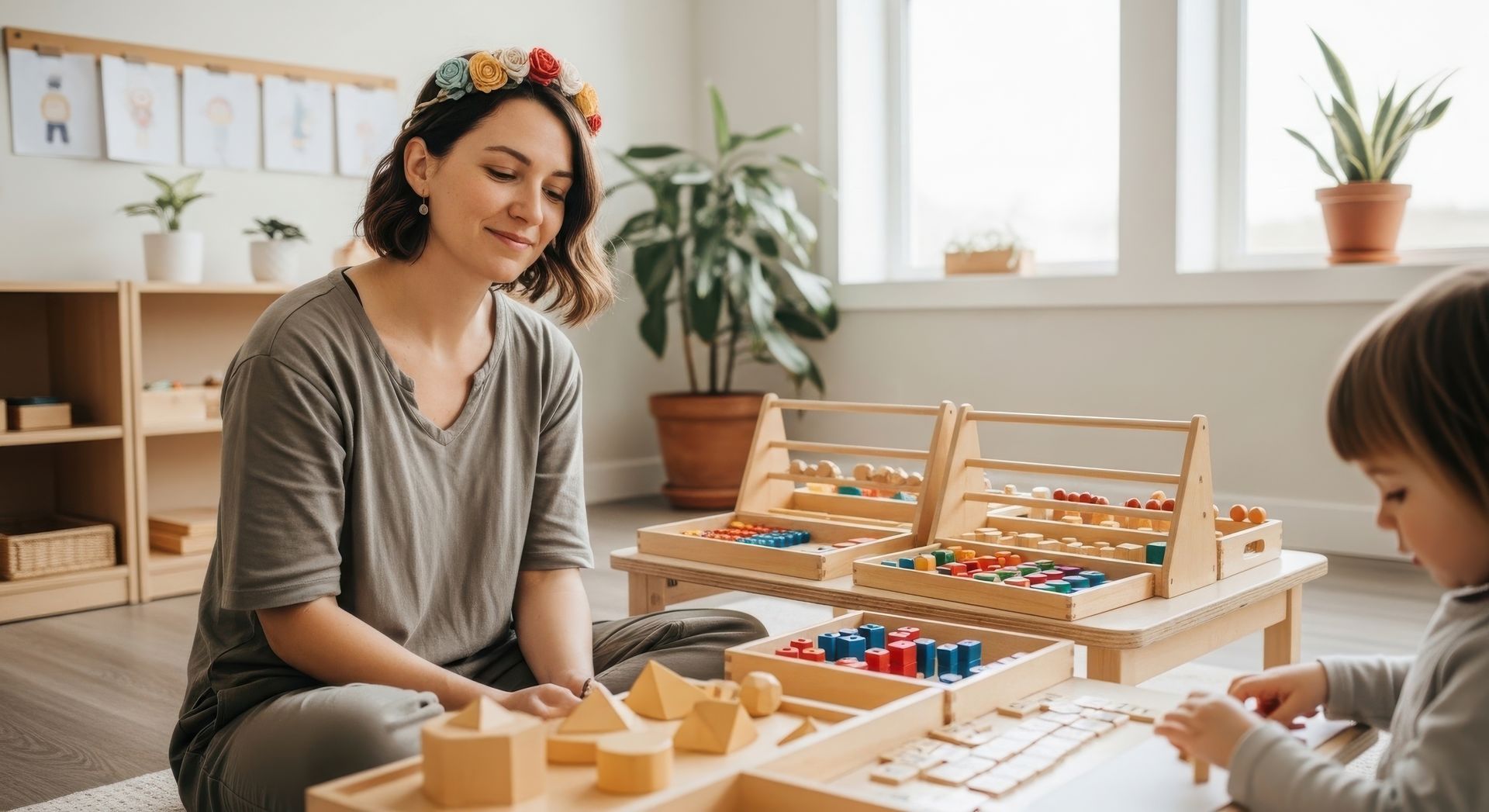
If you've toured a Montessori classroom for the first time, you've probably noticed what's missing: no rows of desks facing a whiteboard, no single teacher lecturing to twenty children at once. Instead, you'll find children of different ages moving purposefully around the room, choosing their own work from low shelves, and returning materials carefully when they're finished. It can look like organized chaos to an outside eye. In practice, it's one of the most carefully designed learning environments in early childhood education.
The prepared environment
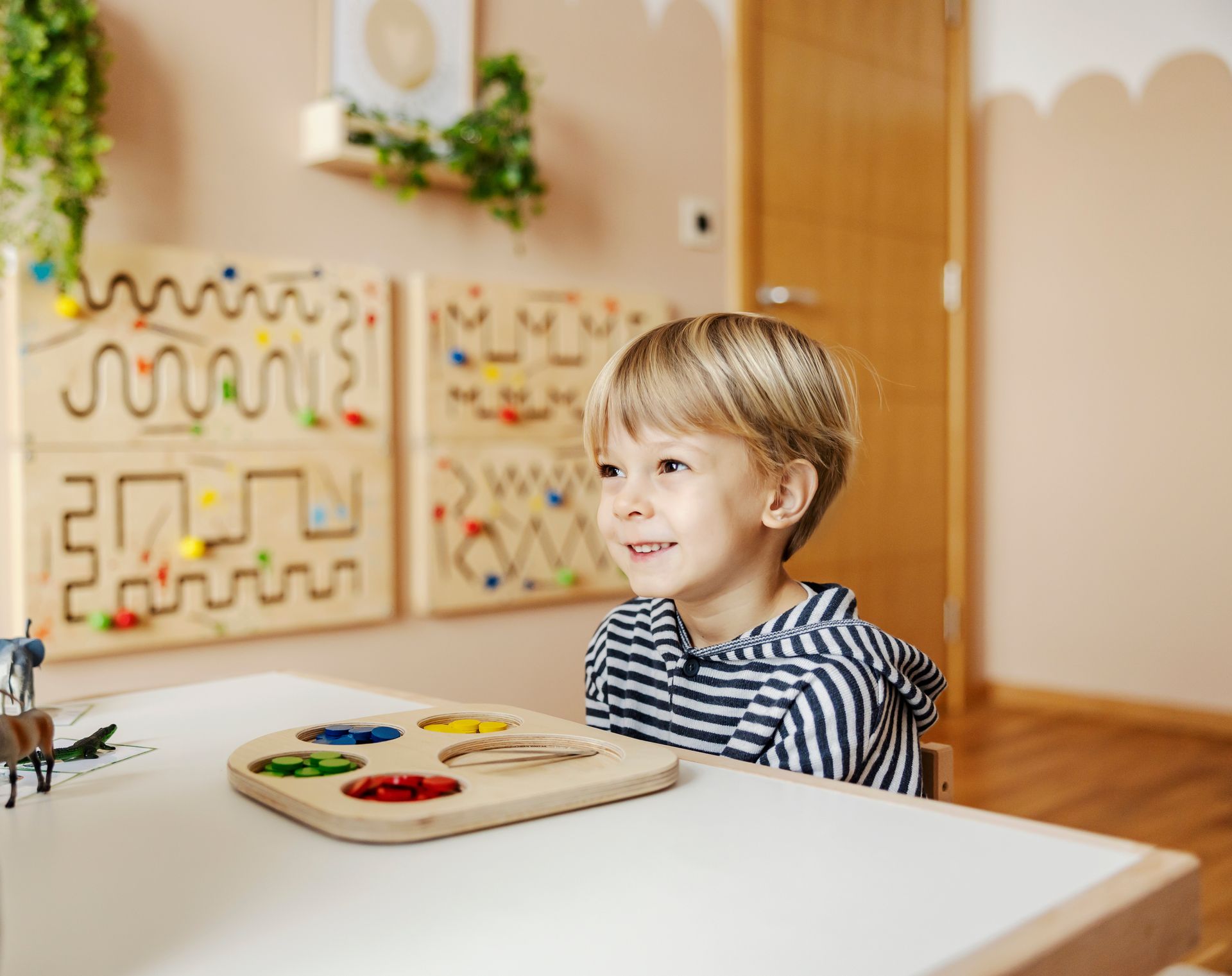
Dr. Maria Montessori believed that children learn best when the environment itself does the teaching. Every shelf, material, and piece of furniture in our classrooms is scaled to a child's size and placed with intention, so that children can select work independently and complete it without waiting on an adult. This isn't about giving children free rein to do whatever they want — it's about giving them the freedom to choose meaningful work within clear, consistent boundaries.
Mixed-age classrooms
Montessori classrooms typically group children across a three-year age span, such as our Toddler Program for children 18 months to 3 years, and our Primary Program for children 3 to 6 years. Younger children watch older children work and are quietly motivated to grow into that role. Older children reinforce their own understanding by helping a younger classmate, which builds patience, leadership, and confidence long before those words mean anything to a five-year-old.
Hands-on, self-correcting materials
Montessori materials are designed so a child can see their own mistake and correct it, without a teacher stepping in to say "no, try again." A cylinder that doesn't fit its socket, a tower that topples because it was stacked out of order — the material itself gives the feedback. This builds concentration and problem-solving skills that carry well beyond the classroom, and it removes a lot of the fear of "getting it wrong" that can follow children into later schooling.
The goal isn't to fill a child with facts. It's to protect their natural drive to learn.
Why families in Elkhorn, Millard, and Valley choose it
Parents often come to us after noticing their child is capable of more independence than a traditional daycare setting asks of them. Montessori meets that capability head-on. Children learn to pour their own water, button their own coat, and resolve small conflicts with words — not because we demand it, but because the environment expects it and trusts them to rise to it.
Every classroom at Montessori Academy of West Omaha follows these same principles, adapted to each stage of development. If you're curious what this looks like day to day, we'd love to show you in person.
Curious what a Montessori day actually looks like for your child's age?